Your data model can be good and still be wrong for AI.
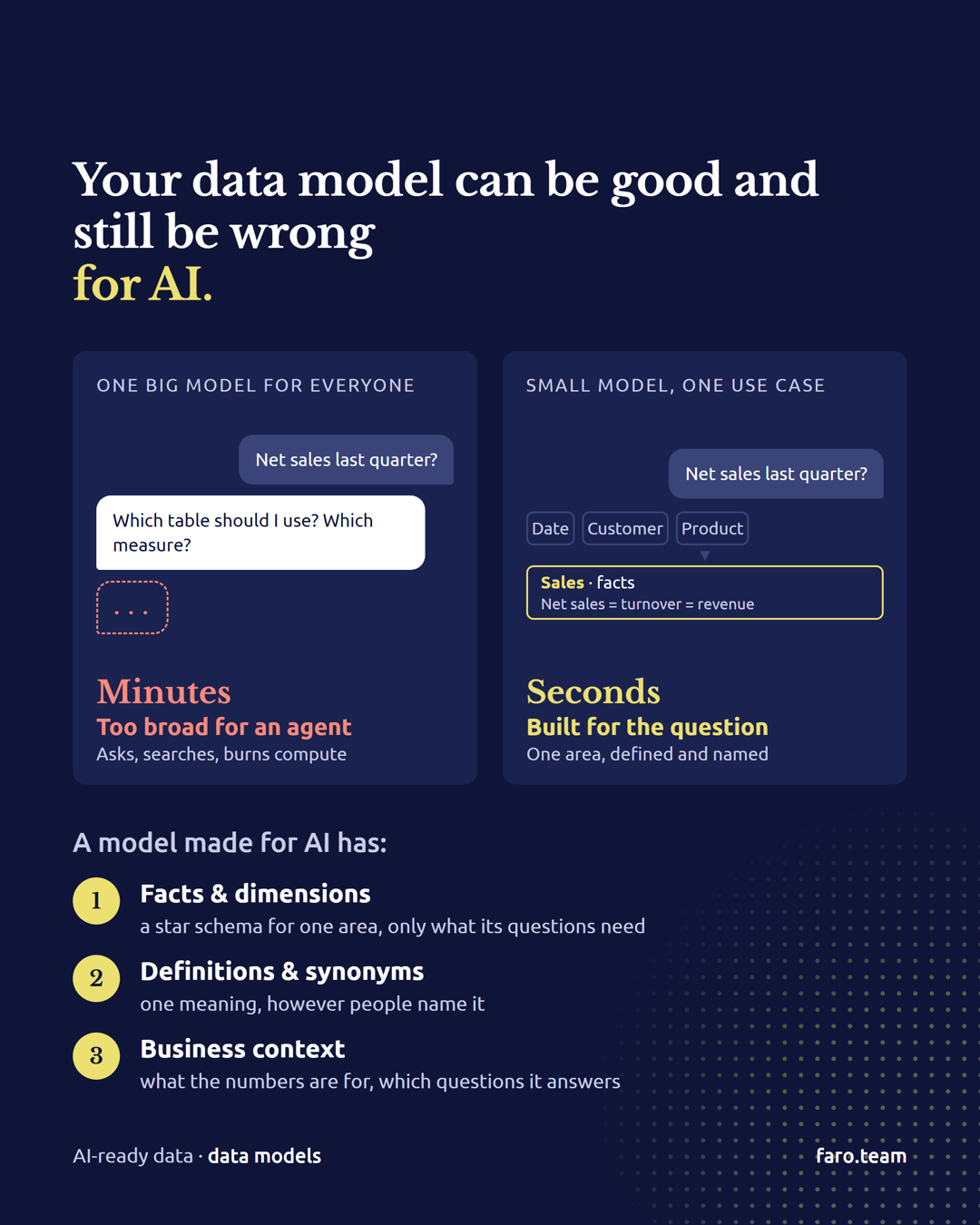
One of our clients pointed an AI agent at their sales semantic model. A solid one: built and refined over years, used across the whole organisation for sales reporting and ad-hoc analysis. And it covered just one area of the business.
The agent still struggled. It kept asking where to find the answers. It was slow. It consumed a lot of compute.
A model built to serve everyone's questions is too broad for an agent. An analyst knows which measure to pick and which table to ignore. An agent has to work that out on every single question.
What worked better was a small, dedicated model built for one use case. Response times dropped from minutes to seconds. In our experience that beats one big model, even on a well-organised warehouse.
The old model wasn't wrong. It was built for people, over years, for a different job. AI may need a different approach and a fresh look at what you actually need.
It's the lesson from the first post in this series, one level down. There is no AI-ready data in general, and no AI-ready model in general. Only ready for a specific question.
Is your AI pointed at the reporting model everyone already uses? Tell me in the comments, or send me a message if you'd like to compare notes.
Join the conversation:
Seen this in your company? Share your take under Mariusz's post on LinkedIn →