Your cloud bill isn't a price list. It's a record of design decisions.
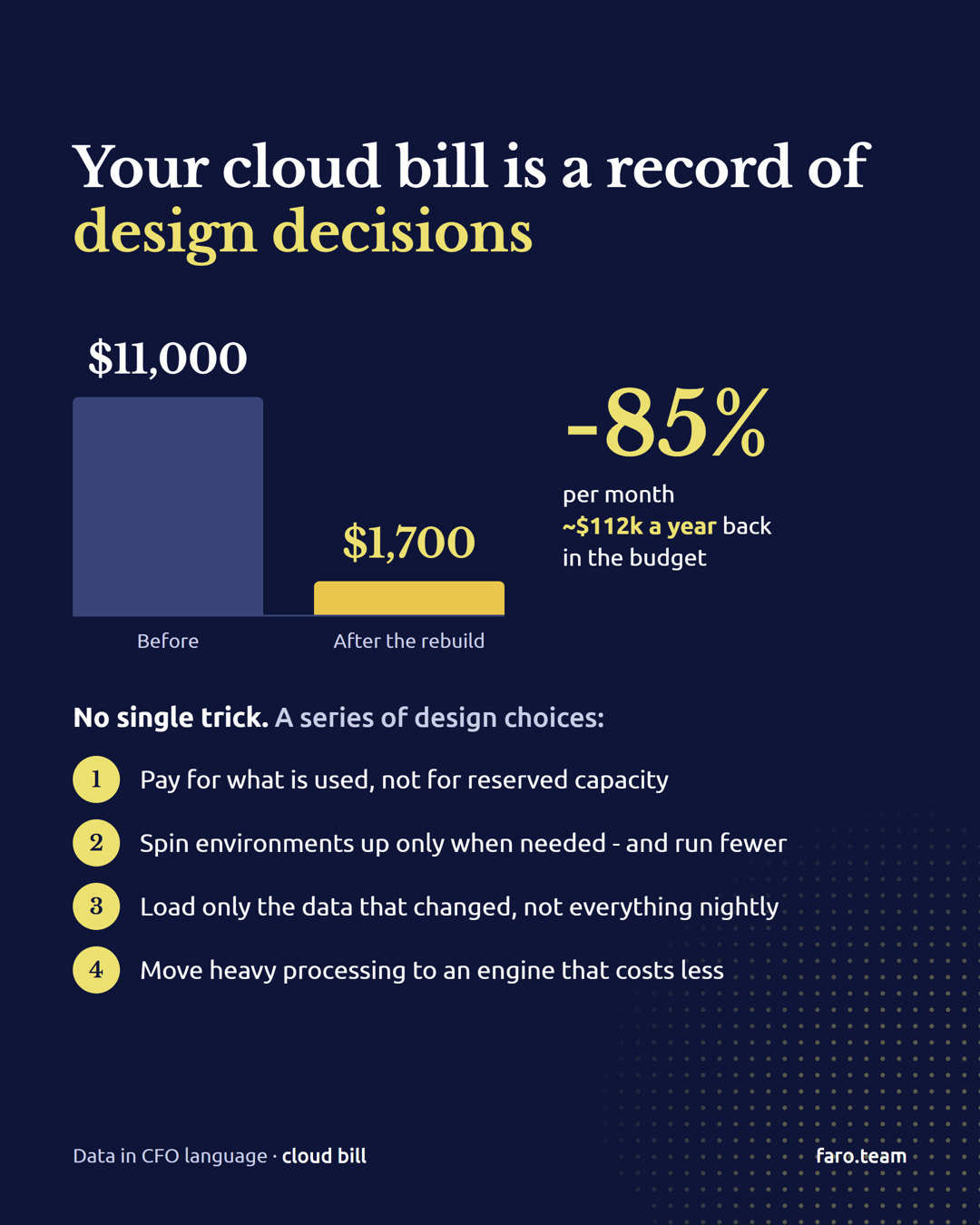
A private university was spending $11,000 a month on an outdated data platform, with engineers busy just keeping it alive.
We rebuilt it on Faro Lighthouse. The bill dropped to $1,700 a month - ~$112k a year back in the budget.
There was no single trick. It was a series of design choices:
None of this was a discount from the vendor. Every line on the old bill was the result of a decision someone made - or never revisited.
That's good news for a CFO: a design decision can be changed. And the team that used to spend its time on maintenance now works on insights.
Three questions worth asking about your own bill:
How does your company keep its data platform costs in check? If you'd like a second pair of eyes on yours, send me a message.
Sources:
Join the conversation:
Seen this in your company? Share your take under Adrian's post on LinkedIn →